


The Heart is the Organ of the Sun
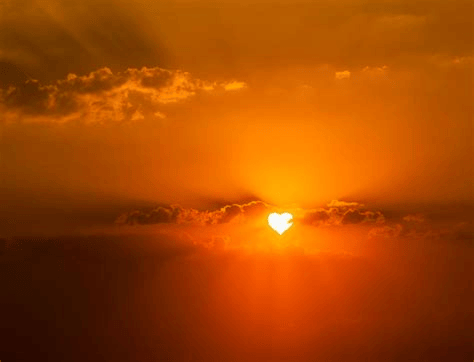
The heart is the essence of life, the vibrant center of the microcosmic world. Similarly, the sun can rightfully be called the “heart of the world”. With its powerful energy and rhythmic pulse, the heart sets the blood in motion. It refines the blood, providing nourishment and protecting it from decay and fragmentation. The heart nourishes us, keeps us warm, and gives us life. It serves as the foundation of life, the god of the hearth, and the initiator of all beings. The heart is the foundation of life for living creatures, the prince among them all, the sun of the microcosmic world. All life depends on it, and from it, vitality and energy flow.
In an era filled with the devastating impact of heart attacks, hypertension, organ transplants, and a noticeable absence of compassion, it becomes absolutely crucial for us to explore the depths of our intricate organs. We must acknowledge that the seemingly simplistic concept of the heart as a mere mechanical pump, which is often emphasized by its rhythmic pulsations, is deserving of a closer examination.
In literature, the heart emerges as the paramount symbol in fairy tales, myths, legends, and proverbs. It can shatter into pieces, reside within our very mouths, or be openly displayed. A heart has the power to nurture strength or to lack empathy. Remarkably, the French term for heart, ‘coeuf’, begets the word ‘courage’. In both French and English, the heart intertwines with memory: ‘learning by heart’ or ‘apprendre par coeur’. The resilience of this vital organ undeniably surpasses all expectations. Daily, it thrums around 100,000 times, reaching an astounding three billion beats in a single lifetime of 70 years, all while enduring unyieldingly despite the interferences of coffee, cigarettes, and alcohol.
(ADD PICTURE)
According to ancient Egyptian wisdom, the heart holds great significance as the center of memory, conscience, and wisdom. It is well-established that intense emotions, trauma, or sudden shocks can deeply impact our heart, leaving long-lasting effects on our soul. Research studies have shed light on the aftermath of a coronary bypass operation, revealing that cognitive abilities, emotional well-being, and memory can suffer for more than a year. Often, this decline is accompanied by severe mood swings and debilitating depression, posing significant challenges in everyday life. Astonishingly, personality changes have been observed following heart transplants, further emphasizing the profound connection between our hearts and our essence. Moreover, medications administered during these medical procedures carry a range of potentially severe consequences, including high blood pressure, kidney failure, infections, osteoporosis, and even a startling 100% increased risk of cancer due to immune suppression.
Cerebral convulsions can occur in up to 15% of individuals who have undergone heart transplants. An intriguing question frequently arises regarding whether a heart transplant simply replaces a physical organ or if it also imparts the inherent qualities linked to the core of one’s being. Organ transplants can cause significant changes in a person’s personality. These changes show that other influences can be transferred, although the way they manifest depends on the specific organ. It is particularly noteworthy that patients who have received heart transplants often display an abrupt acquisition of behaviors and traits that were previously foreign to them. Extensive research suggests that these newfound qualities belonged to the deceased organ donor.
During the third week of pregnancy, the heart takes shape as the first organ to develop, breaking away from the growing embryo. It embarks on a gentle voyage, descending and moving inward from the outer fringes towards the core, eventually finding its place close to the mind. This extraordinary journey serves as a poignant reminder of the deep bond between our hearts and minds. Anatomists perceive this captivating transformation as a symbolic reflection of our transition from the intangible realm to our concrete existence, embodying the very essence of our being.
(Add Picture)
Within the heart, the blood flows through a complex network of streams, intersecting and circulating throughout the entire body. There is a feature called the “vein cross” above the heart. Furthermore, the four chambers of the heart form a cross shape, emphasizing its crucial role. This concept aligns with the idea of a lemniscate, where the heart serves as both the center of the upper circulatory system, connecting us to the external world through the lungs and heart, and the large circulatory system, connecting with our internal organs. Indeed, the heart is the central hub of circulation. It compresses the blood to its maximum degree, influenced by the force of gravity. Simultaneously, blood enters the peripheral capillaries, the smallest blood vessels of the skin, propelled by suction, resulting in a state of levity and buoyancy.
When the doctor takes blood from a finger and then puts a glass capillary into the drop of blood one can see how the blood rises without outside help. The movement of heart circulation is composed of these four dynamic energetic complexes: gravity-buoyancy, and outside-inside. If we now also consider that the heart of the embryo, as a small tube without muscles, already begins to beat, and that islands of blood show movement activity without a connection to the heart, then besides the many additional physiological data such as density, speed of flow, or pressure, we can no longer doubt that the heart, as the central organ of rhythm, is not the mechanical origin of the blood’s movement.
Blood has a natural energy that drives its circulation. Based on my observations, it can be confidently stated that the blood has a distinct and spontaneous ability to circulate within the body, independent of the heart’s activity. In this way, the blood, arteries, and heart work together harmoniously, forming a connected and cohesive inner system that extends not only to the innermost parts of our organs but also to the wider external world. The rhythm of the heartbeat and pulse wave serves as a reflection of the entire organism, a concept that has been understood for centuries in Chinese medicine through pulse diagnostics and in certain investigative cardiac auscultation methods. Thus, the rhythm of the heart serves as an expression of the intricate relationship between the upper nerve-sense activity and the lower metabolic and limb activities.
(ADD PICTURE)
When the heart beats too rapidly, such as during a fever, or when it becomes sluggish, like in cases of heart failure, it indicates an imbalance in the body’s dynamic metabolic forces. Similarly, when the heartbeat slows down due to old age, or when it contracts due to conditions like angina pectoris, coronary sclerosis, or a heart attack, it highlights the predominance of head activity that emphasizes breakdown and deceleration. Moreover, heart arrhythmia is a consequence of a lack of coordination between the upper and lower systems. It becomes evident that in treating the heart, we must also consider the interplay with other organs and bodily movements.
Throughout history, the heart has been seen in different ways as the central organ of life. Each organ has four aspects: anatomical-physical, vital, psychological, and spiritual. The heart is particularly interesting due to its unique development and physical structure. It has been compared to a “cathedral” because of its chambers and muscular support. Our heart is the life organ that makes us feel our heartbeat. The heart is a vital organ that holds various emotions, from grief and fear to love and joy. It is also the center of our conscience and intuitive truth. In art and poetry, the heart has always been depicted as the voice of our conscience and the source of heartfelt feelings.
Make Your Business Online By The Best No—Code & No—Plugin Solution In The Market.
30 Day Money-Back Guarantee
Say goodbye to your low online sales rate!